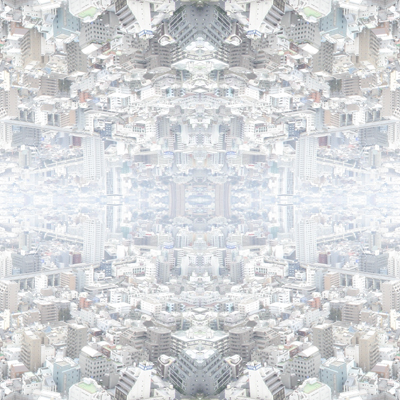
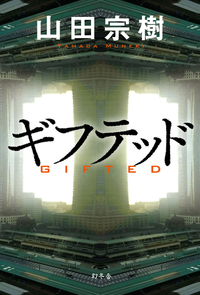
SANCTUARY│urbanized nature ―都市と自然のカムヤシロ― 私は、自然の美しさに心を打たれるのと同じように、都市の風景にも感動と畏怖を覚えます。 それは、かつて日本人が聖域として崇めてきた自然が、現代では都市へと変貌したと感じるからです。 九州の自然に囲まれて育った私は、初めて東京のビル群を目にしたとき、それが山々のように巨大で、その中に入れば森のようである事に驚きました。 自然に対して抱いていた畏怖の感情を、人工物である都市にも感じたのです。 なぜ人工物に畏怖を抱くのか――それを考える中で、都市もまた自然由来の素材、鉄鉱石や石英、石灰石や石油といった鉱物資源から作られている事に気づきました。 つまり都市は、人間が自然を作り替えて生んだ“新しい自然”であり、自然の延長線上にある存在なのです。 そして東京という都市は、四季の移いの様に絶えず形を変えながら成長し続けています。 その姿はまるで万華鏡のようで、私はそこに心を奪われ、2005年よりこの作品を作り続けています。 このシリーズはもともと、自身の心を保つ為に“私的な聖域”を創る行為として始まりました。 都会生活における疲弊のなかで、カメラを通して都市を見つめ、都市を「聖なる場所=カムヤシロ」として再解釈することで、心のバランスを取り戻していきました。 そうやって作り続けた作品がシンメトリーであったのは意味のある事でした。 それは日本人の自然観や宗教建築の形状に通じるものであり、神社や寺、モスク、教会など、世界中の信仰の場に共通する造形感覚とも重なりました。 人が敬虔な思いを形にする時、対称性という普遍的な表現が現れる――この根源的な造形感覚に導かれながら、私は都市という存在を新たな聖域として捉え直しています。 そしてこの作品を通して、「日本とは何か」「どうすれば過去の過ちを繰り返さず、強い日本を未来へと繋げることができるのか」―― その問いに、自分なりの答えを、誰にでも伝わる方法を目指して提示していきたいと考えています。 -- SANCTUARY | Urbanized Nature ? The Kamuyashiro of City and Nature ? Just as I am moved by the beauty of untouched nature, I also feel awe and reverence toward urban landscapes. This is because I sense that the sacred natural sites once venerated by the Japanese people have now transformed into cities in the modern era. Having grown up surrounded by the nature of Kyushu, I was astonished when I first saw the towering buildings of Tokyo. They stood like mountains, and stepping inside them felt like entering a forest. I realized that the sense of awe I once felt toward nature was now being evoked by this human-made environment. Why do we feel awe toward artificial structures? While pondering this question, I came to understand that cities are constructed from natural resources?minerals like iron ore, quartz, limestone, and petroleum. In other words, the city is a "new nature," created by humans transforming the original nature. It exists as a continuation of the natural world. The city of Tokyo, in particular, constantly evolves, shifting form like the changing seasons. Its ever-transforming face resembles a kaleidoscope, and I have been captivated by it since 2005, continuing to create this series of works. This project originally began as an act of creating a "personal sanctuary" to preserve my own sense of self. In the exhaustion of urban life, I turned my camera toward the city, reinterpreting it as a sacred place?a Kamuyashiro?to regain emotional balance. That these works took on a symmetrical form was no coincidence. Symmetry resonates with the Japanese sense of nature and with the architectural forms of sacred spaces?shrines, temples, mosques, and churches?found throughout the world. When people give form to reverence, a universal expression of symmetry often emerges. Guided by this fundamental design instinct, I have come to reframe the city as a new kind of sacred space. Through this work, I hope to pose questions such as: What does it mean to be Japanese? How can we avoid repeating the mistakes of the past and build a strong, forward-looking Japan? I aim to offer my own answers in a way that resonates universally?with honesty, clarity, and depth. For Movie 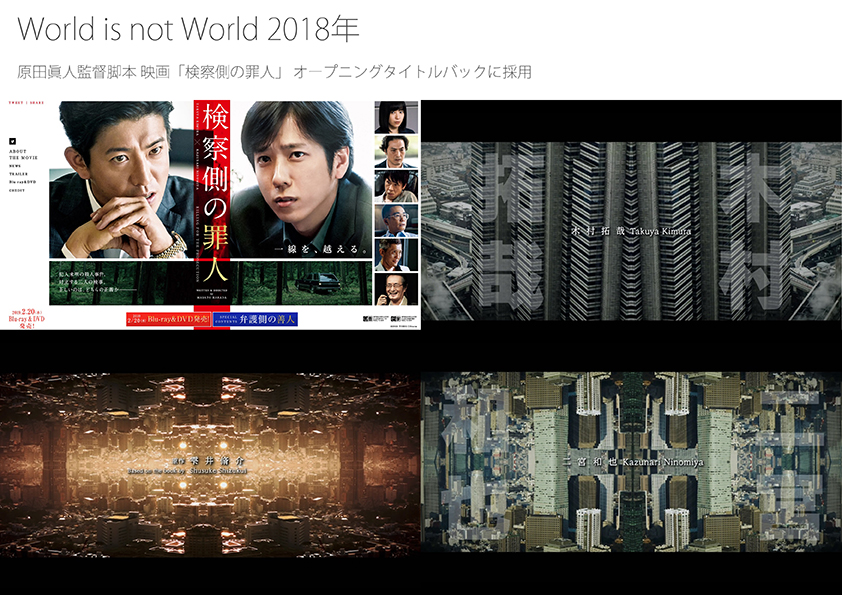 For Book Cover 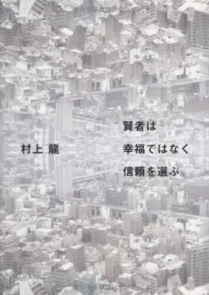
 |